
- Project Summary
- Study Duration
- Objectives
- Outcomes
- Team Members
- Publications
Project Summary
Dengue fever is a significant and growing public health concern in Nepal, with outbreaks occurring every 2 to 3 years and cases increasing annually. In 2019, Nepal experienced over 17,000 cases and six deaths, while the 2022 outbreak saw dengue reported in all 77 districts, including areas at altitudes over 2100 meters, indicating the role of rising temperatures due to climate change. By 2023, dengue cases surged to 53,951 with 88 deaths, with over 50,000 cases reported by November 2023 alone. Despite these alarming numbers, the current efforts to control dengue lack an interdisciplinary approach that integrates eco-bio-social dynamics, which is crucial for a comprehensive understanding of dengue transmission. Dengue is now considered endemic in Nepal, partly due to climate change, which has facilitated its spread to previously non-endemic highland regions. However, the true extent of dengue’s impact may be underestimated due to under-reporting, stemming from a limited national reporting mechanism, untrained manpower, and changes in the national health system structure. Current efforts also lack the interdisciplinary approach needed to comprehensively understand the interdisciplinary dynamics of dengue transmission. However, the lack of an integrated surveillance system hinders timely detection, response, and control measures and creates ambiguity in disease burden.
Study Duration
Oct 2024 to Dec 2025
Objectives
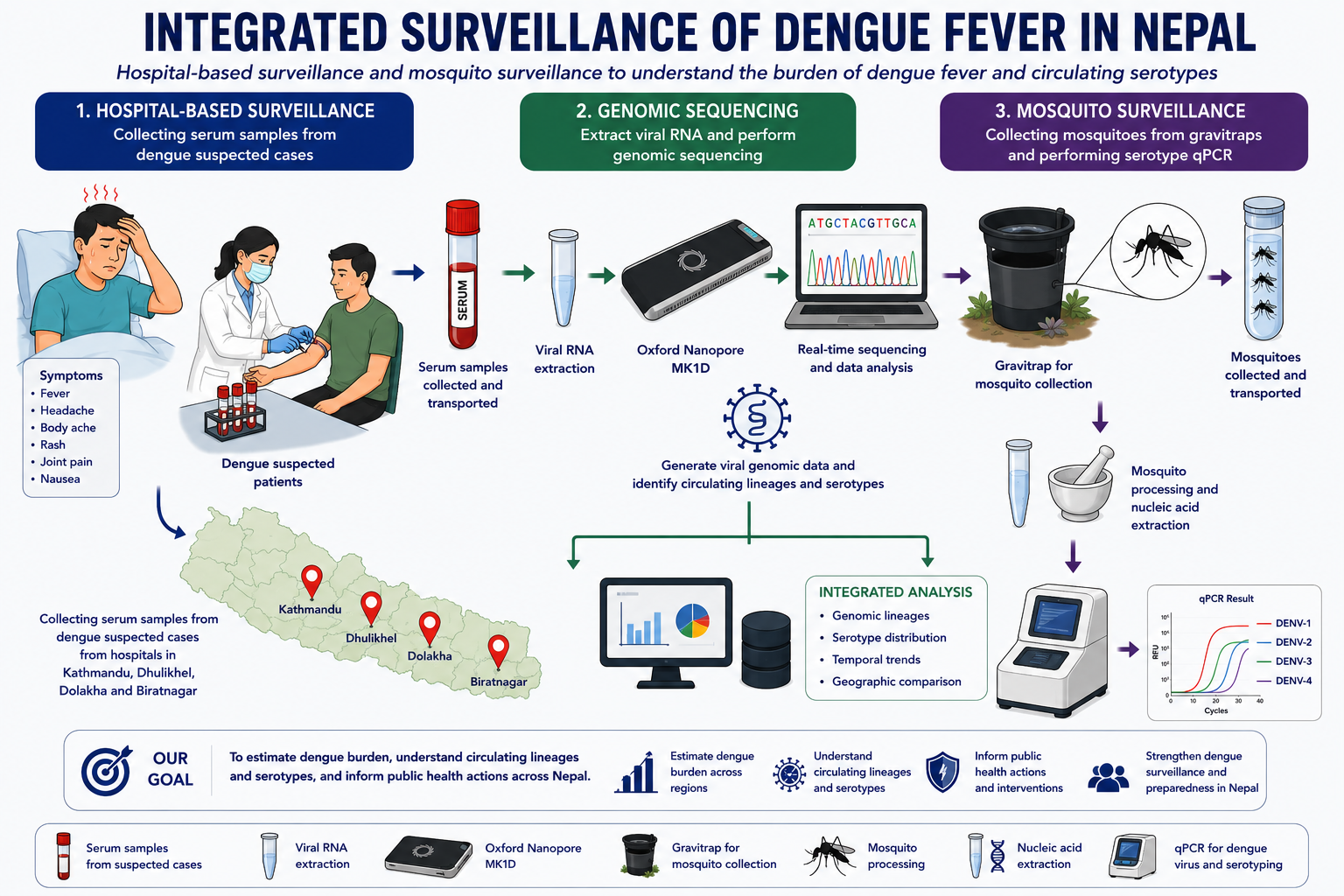
To understand the burden of dengue and correlate its genotype and phenotype with clinical outcomes. Also, to investigate the prevalence of dengue burden in Nepal.
Outcomes
This project aims to conduct an awareness/preparedness program for the community, local authorities, and policymakers respectively focused on intervention activities, including source reduction approaches (mosquito-proofing domestic wells, cleaning of rooftop water below the solar panels, removal of stagnant rain-water/wastewater sites: decorative ponds, overhead water tanks, removal of unused tires) and personal protection awareness (screening window/doors, use of repellents and mosquito nets). Furthermore, the capacity building will include the implementation of short-term courses on molecular diagnosis (multiplex qPCR panel for dengue and chikungunya) and next-generation sequencing (Illumina and Oxford Nanopore) of dengue virus, which will include laboratory personnel from government laboratory networks, including provincial public health laboratories. We envision further adaptation of this course for other emerging infectious diseases. The integration of surveillance components enables authorities to respond rapidly and effectively to dengue outbreaks as well as outbreaks of other mosquito-borne viruses (through the National Pathogen Genome Sequencing Consortium). By combining information from different sources, they can issue early warnings (cellular notification systems), implement targeted interventions, and adapt strategies based on the specific characteristics of the circulating virus strains and local environmental conditions. This integrated approach is crucial for minimizing the impact of the outbreak and preventing its escalation. Further, the team will generate seroprevalence of dengue in Nepal using national representative serum samples. Furthermore, our study team will actively engage with policymakers and create active collaboration with national partners and stakeholders to enhance data sharing, thus achieving an integrated reporting system (dengue case/outbreak reporting system). This plethora of information will aid in understanding the changing epidemiology of dengue in Nepal. The generated genomic information will be shared through NCBI, GISAID, and the National Pathogen Genome Sequencing Consortium, Nepal. This inclusive platform will direct the course of efforts from hospital-based and genomic surveillance as it includes several national partners working in Dengue. Through this consortium, we will continue national capacity building in the next-generation sequencing of pathogens (Illumina and Oxford Nanopore) through one hands-on training program.
Team Members
Principal Investigator(s): Prof. Dr. Rajeev Shrestha
Co-Investigator(s): Prof. Dr. Sony Shakya Shrestha, Dr. Dipesh Tamrakar, Mr. Nishan Katuwal, Ms. Aastha Shrestha, Mr. Sabin Bikram Shahi
Project Manager(s): Mr. Nishan Katuwal
Project Coordinator(s): Ms. Aastha Shrestha
Research Assistant(s): Ms. Aarjya Tara Bajracharya, Ms. Alisha Shrestha
Supported by: Bill and Melinda Gates Foundation (BMGF), United States
Collaborating Partners: Chan Zuckerberg Biohub San Francisco (CZ Biohub SF), United States; Asia Pathogen Genomics Initiative (Asia PGI), Singapore
Publications
Not Yet Published