
- Project Summary
- Study Duration
- Objectives
- Outcomes
- Team Members
- Publications
Project Summary
Bacterial whole genome sequencing helps to improve our understanding of the epidemiology and pathogenesis of bacterial infections and allows comprehensive investigation of virulence, evolution, and resistance mechanisms. Nepal, in recent times, has seen some increase in sequencing capabilities but faces hurdles for optimum utilization. However, these hurdles can be alleviated with the use of Illumina iSeq100.
Study Duration
From Jan 2024-Dec 2024
Objectives
This study aimed at performing whole genome sequencing of bacteria isolated utilizing the iSeq100 platform.
Outcomes
The project produced high-quality genomic data through Illumina iSeq100 sequencing and processing including adapter trimming, assembly, and coverage calculation. Additionally, a comparative analysis of genomic data from Illumina iSeq100 with that from Illumina HiSeq and NextSeq1000/2000 for isolates in the SEAP Project provided valuable insights into sequencing platform consistency. Ultimately, the project enhanced our understanding of bacterial genomics, genetic diversity, and the reliability of different sequencing platforms, with potential capacity building.
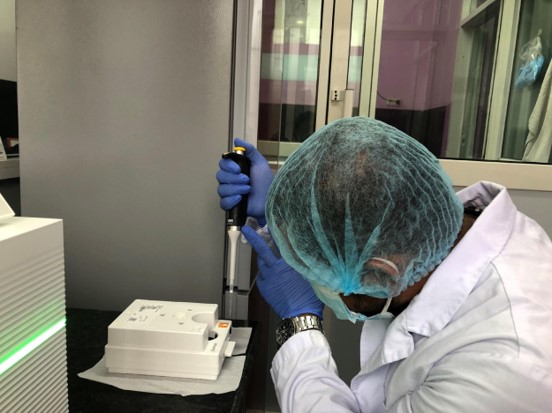
Additionally, two PhD students working in bacterial genomics were also trained in NGS (wet lab and dry lab) for bacterial isolates.
Team Members
Principal Investigator(s): Prof. Dr. Rajeev Shrestha, Mr. Nishan Katuwal
Co-Investigator(s): Dr. Dipesh Tamrakar, Ms. Aastha Shrestha, Mr. Sabin Bikram Shahi, Mr. Shiva Ram Naga, Ms. Aastha Shrestha
Project Coordinator(s): N/A
Research Assistant(s): N/A
Supported by: Center for Infectious Disease Research and Surveillance, DHKUH
Collaborating Partners: Stanford University, United States
Publications
- Katuwal N, Naga SR, Shrestha A, Shahi SB, Tamrakar D, Shrestha R. Leveraging illumina iSeq100 for whole genome sequencing of Salmonella Typhi for a resource-limited setting. Sci Rep. 2025 Sep 26;15(1):33034. doi: 10.1038/s41598-025-05863-8. PMID: 41006350; PMCID: PMC12475002.