

- Project Summary
- Study Duration
- Objectives
- Outcomes
- Team Members
- Publications
Project Summary
The Surveillance of Enteric fever in Asia Project (SEAP) Phase II is a prospective multi-site aiming to generate data to inform policy recommendations on enteric fever prevention and control, as well as facilitate typhoid vaccine implementation. The primary goal of this nested study is the validation of a school-based sampling frame for rapidly assessing typhoid burden without the need for extensive medical microbiological diagnostic and population-based infrastructure in each assessed community. School-based sampling is logistically easier and faster to implement than population-based sampling, but it is unknown whether incidence estimates derived from school-based samples will be accurate relative to population samples. The study will leverage the ongoing population-based SEAP Phase II sero-surveillance study that has been conducted since 2018 by using the population of Kavre as a “gold-standard” sample to compare the validity of incidence estimates derived from a school-based sample in the same catchment areas. For this purpose we will select 800 students randomly from 8 schools. We will also evaluate a school-based sampling approach in the Dolakha region where there is no microbiological capacity for blood culture surveillance for enteric fever. For this purpose we will select 500 students randomly from 5 schools. Dried blood spots will be collected from selected students of Kavre and Dolakha and tested for anti-IgG and anti-IgA responses to S. Typhi Hemolysin E (HlyE, a pore-forming toxin) and S. Typhi lipopolysaccharide (LPS, containing serogroup antigens O9 and O12) using ELISAs. The results will aid the validation and development of affordable assessment methods for enteric fever burden and deploy them in areas that lack medical microbiological diagnostic infrastructure.
Study Duration
From 11/15/2021 – 4/5/2022
Objectives
This study school-based sampling is a valid approach to estimate the sero-prevalence of enteric fever. It also provides critically-needed information on the burden of enteric fever in the area/community lacking clinical blood culture surveillance. Dolakha, a rural district, has a lower burden of typhoid.
Outcomes
This study school-based sampling is a valid approach to estimate the sero-prevalence of enteric fever. It also provides critically-needed information on the burden of enteric fever in the area/community lacking clinical blood culture surveillance. Dolakha, a rural district, has a lower burden of typhoid.
Team Members
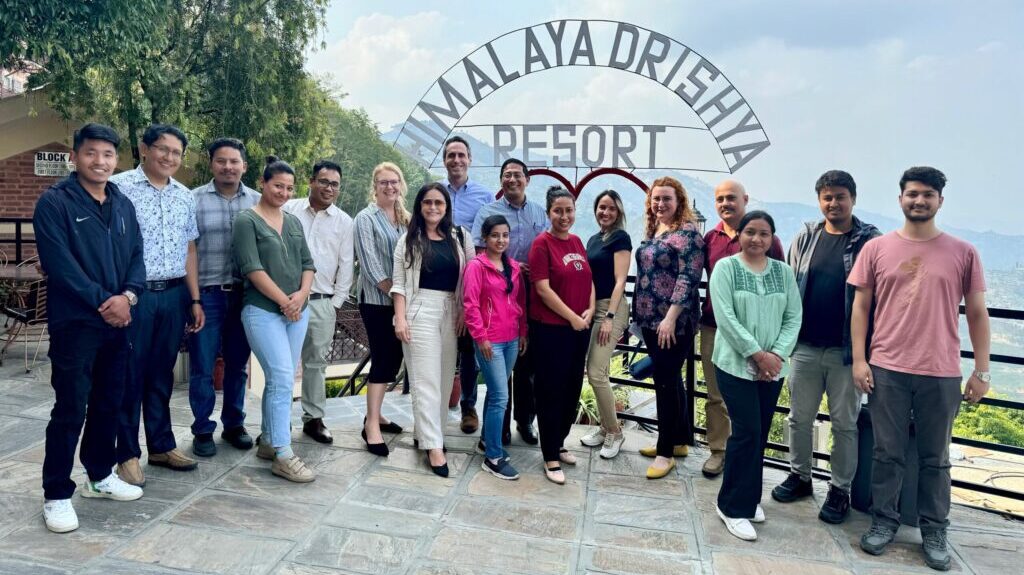
Principal Investigator: Dr. Dipesh Tamrakar
Co-Investigator(s): Dr. Rajeev Shrestha, Dr. Biraj Kamarcharya, Dr. Jason Andrews
Project Coordinator: Mr. Shiva Ram Naga
Research Assistant(s): Mr. Sabin Bikram Shahi, Mr. Anil Khanal, Ms. Manisha Banjara, Ms. Nisha Shrestha
Supported by: Sabin Vaccine Institute, USA
Collaborating Partner: Stanford University, San Francisco, USA
Publications
Not Yet Publised