
- Project Summary
- Study Duration
- Objectives
- Outcomes
- Team Members
- Publications
The COVID-19 pandemic placed significant pressure on Nepal’s health system, particularly at the provincial and local levels where laboratory capacity, disease surveillance, contact tracing, and sample transportation systems were limited. To support an effective and coordinated response, this project was implemented in partnership with government agencies and provincial stakeholders to strengthen COVID-19 testing, surveillance, and public health response mechanisms in Bagmati and Karnali Provinces.
Study Duration
From 2020-2021
Objectives
The project aimed to strengthen Nepal’s provincial-level response to COVID-19 by improving diagnostic capacity, enhancing surveillance systems, and building local public health workforce capabilities. Specifically, the project sought to strengthen provincial PCR laboratories through infrastructure upgrades, equipment, supplies, quality assurance mechanisms, and laboratory personnel training. It also aimed to establish an efficient hub-and-spoke sample collection and transportation network that would enable timely collection, safe transport, and rapid testing of COVID-19 samples, including from remote and hard-to-reach communities. In addition, the project sought to expand the use of a digital real-time surveillance platform for case investigation and contact tracing, enabling municipalities and provincial authorities to monitor cases, contacts, and transmission patterns, support evidence-based decision-making, and improve coordination across different levels of government. Through these interventions, the project aimed to increase testing coverage, improve turnaround times, strengthen contact tracing, and enhance the overall effectiveness of the COVID-19 response in Bagmati and Karnali Provinces.
Outcomes
The project substantially strengthened provincial COVID-19 preparedness and response capacity in Nepal. Through this project, the provincial laboratory in Province 6 was equipped with critical infrastructure, laboratory equipment, consumables, and infection prevention supplies, while laboratory personnel received training in PCR testing, biosafety, quality control, sample processing, and electronic reporting. The project contributed to improved testing capacity and quality assurance systems, helping laboratories provide more timely and reliable COVID-19 diagnostic services. To improve access to testing, healthcare workers were trained in sample collection, transportation, and cold-chain management, supporting the establishment of a coordinated sample referral system between collection sites and provincial laboratories. A dedicated course on molecular diagnostics was created which was later approved by the Ministry of Social Welfare at Karnali Province.
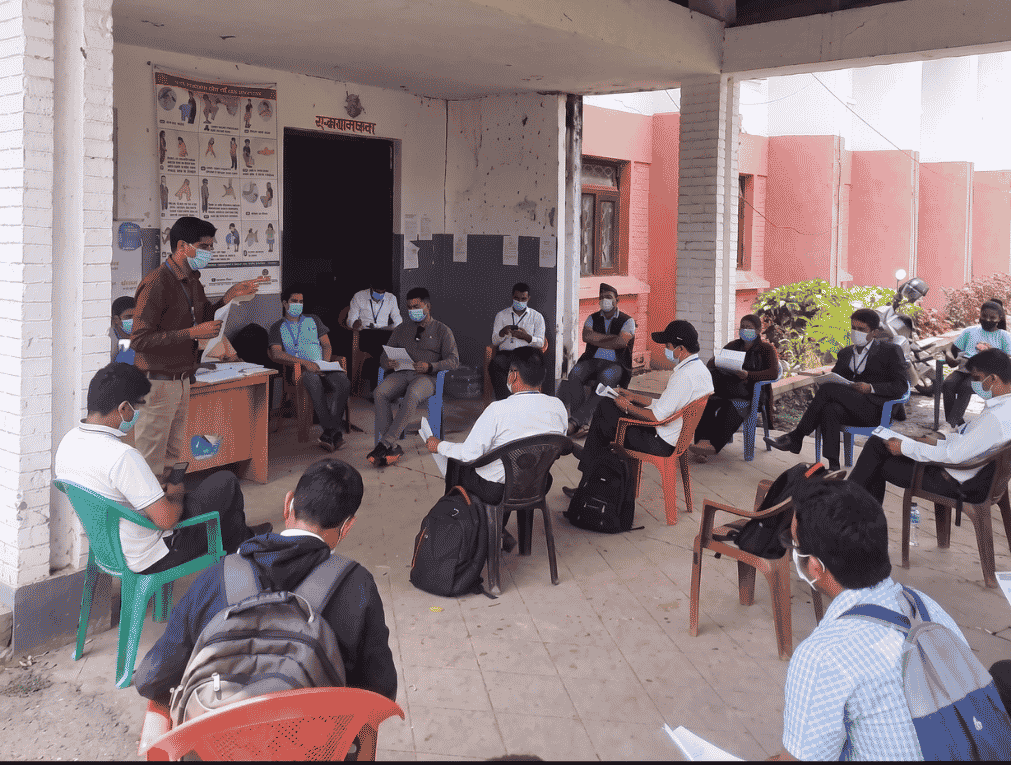
The project also strengthened disease surveillance and contact tracing through the development and implementation of a digital real-time surveillance platform and the establishment of more than 100 Case Investigation and Contact Tracing (CICT) teams across municipalities in Karnali Province. Training programs, manuals, and online learning platforms were developed to support municipal health workers in contact tracing, digital reporting, sample collection, and surveillance activities. The project further expanded support through innovative digital health solutions, including the reWARD telehealth platform, which enabled remote monitoring and follow-up of thousands of COVID-19 patients in home isolation. Together, these achievements enhanced coordination between local, provincial, and national health authorities, improved access to testing and surveillance services, and strengthened Nepal’s capacity to respond to future public health emergencies.
Team Members
Principal Investigator(s): Prof. Dr. Archana Shrestha, Dr. Biraj Man Karmacharya
Project Director: Prof. Dr. Rajeev Shrestha
Co-Investigator(s): Prof. Dr. Rajeev Shrestha, Dr. Dipesh Tamrakar, Mr. Nishan Katuwal
Project Coordinator(s): Mr. Bikram Adhikari, Mr. Tek Bahadur Thapa
Molecular Biologist and Lab Lead: Mr. Nishan Katuwal
Research Assistants: Ms.Lisasha Poudel, Ms. Deekshya Neupane, Ms. Pranita Maharjan, Ms. Rashmi Maharjan
Supported by: Gates Foundation
Collaborating Partner: Ministry of Health (Bagmati Province), Nepal, Ministry of Social Welfare (Karnali Province), Nepal, USAID’s Strengthening Systems for Better Health (SSBH)
Publications
- Poudel L, Adhikari B,…..Katuwal N, Karmacharya BM, Shrestha A. Assessment of Home Isolation Measures and Factors Associated with Adherence Among Patients During the Pandemic in Nepal: A Cross-Sectional Study. Global Journal of Medicine and Public Health. Jan 2025. Vol 13 (6). ISSN# 2277-9604
- Adhikari B, Poudel L, Thapa TB, Neupane D, Maharjan P, Hagaman A, Bhandari N, Katuwal N, Shrestha B, Maharjan R, Shrestha S, Shrestha A, Tamrakar D, Rajbhandari B, Shahi BB, Shrestha R, Karmacharya BM, Shrestha A. Prevalence and factors associated with depression, anxiety, and stress symptoms among home isolated COVID-19 patients in Western Nepal. Dialogues Health. 2023 Dec;2:100090. doi: 10.1016/j.dialog.2022.100090. Epub 2022 Dec 5. PMID: 36624774; PMCID: PMC9721187.
- Thapa TB, Adhikari B, Poudel L, Adhikari P, Shahi BB, Bhattarai K, Paudel B, Deuja V, Bhandari B, Shrestha A. An evaluation of COVID-19 investigation and contact tracing training in Karnali, Nepal. One Health Journal of Nepal. 2021;1(1):1–5.