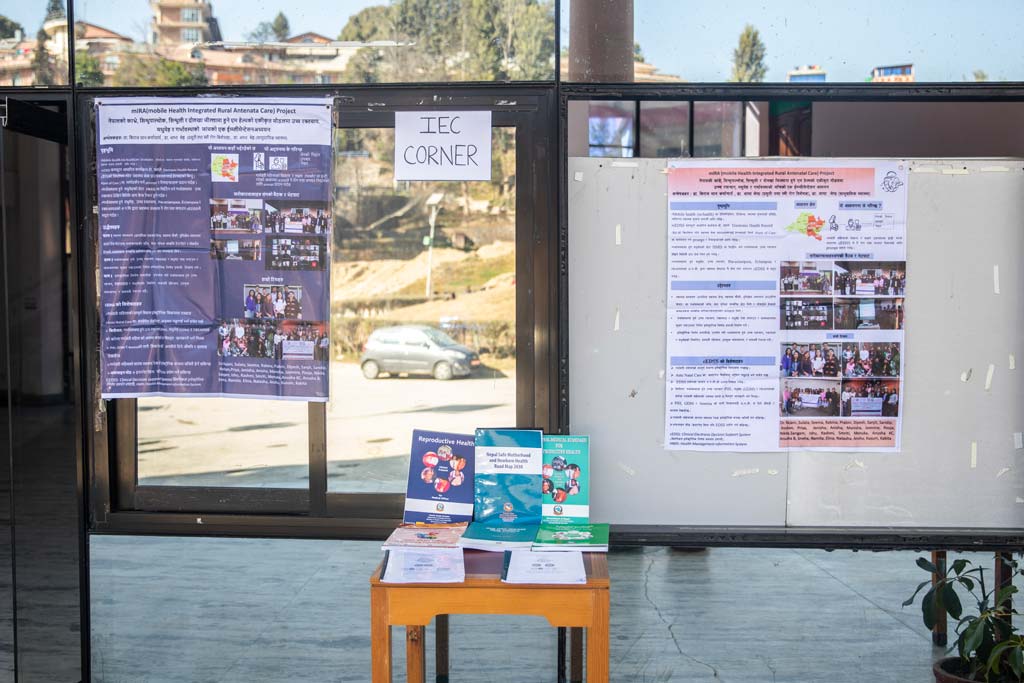
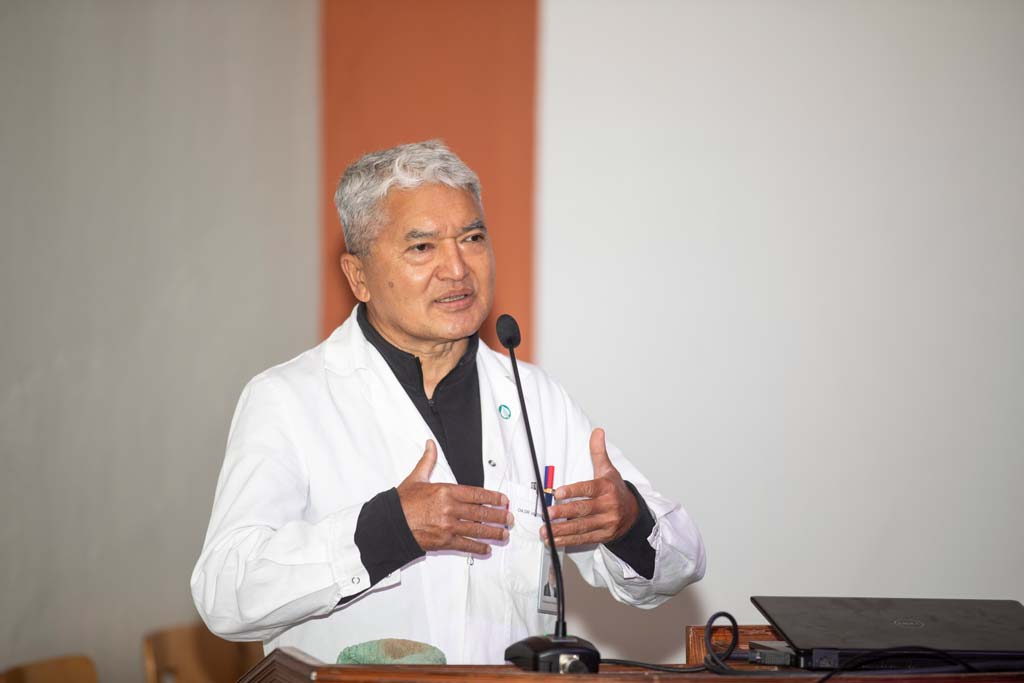
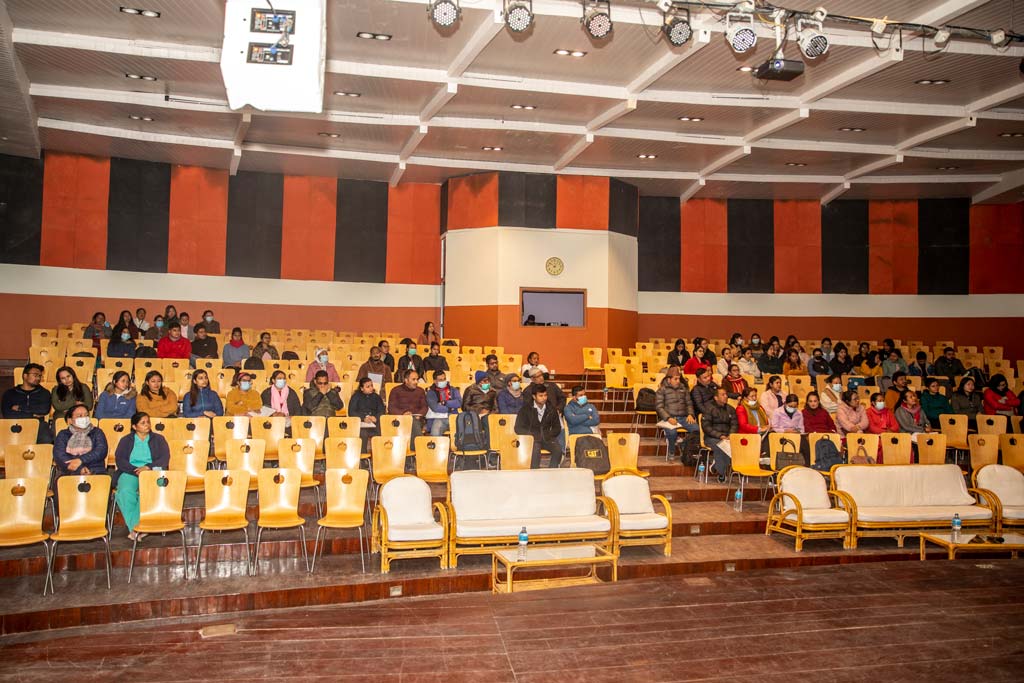
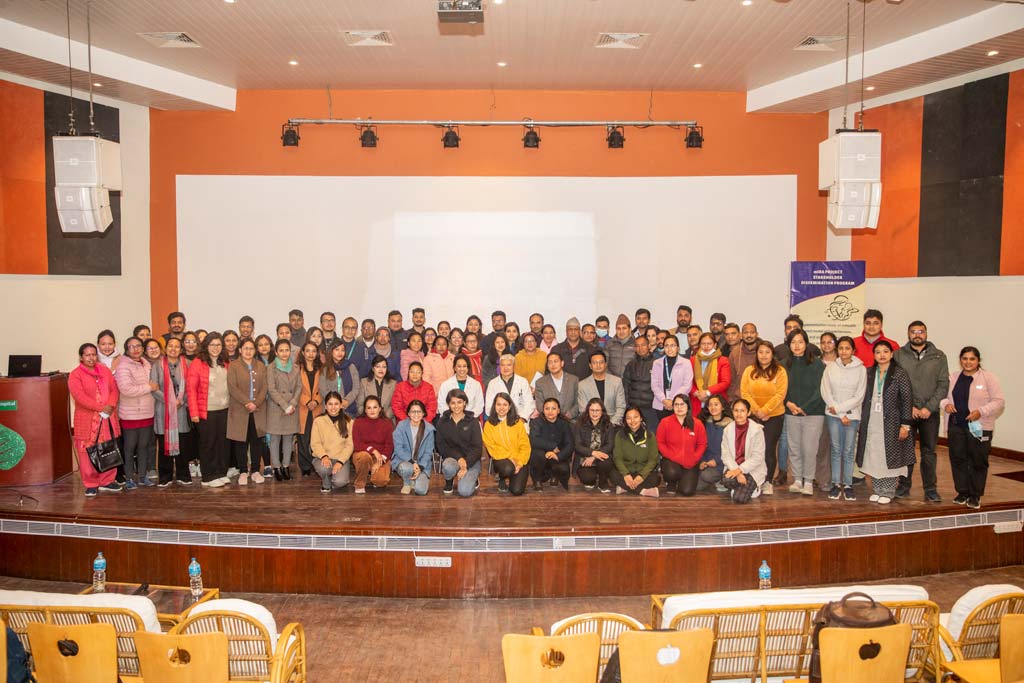
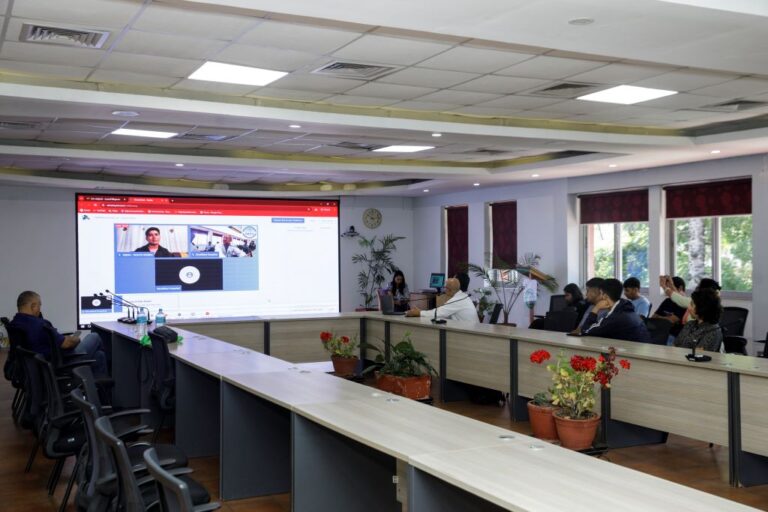
mIRA (mobile health Integrated Rural Antenatal care) research study entitled “An implementation study of mHealth integrated model of hypertension, diabetes, anemia and antenatal care in primary care settings of Kavre, Sindhupalchok, Sindhuli and Dolakha in Nepal conducted local stakeholder dissemination on 2nd Feb 2022.The participants for the dissemination were District Health Officers, Health Coordinators from municipalities, Health Incharges and Auxiliary Nurse midwives from health facilities, Professors, doctors, staffs and students from Kathmandu University School of Medical Sciences.The main objective of this research study was to develop tailor made Electronic Decision Support System( EDSS) for Auxiliary Nurse Midwives to improve quality of Antenatal Care in rural settings of Nepal. The two EDSS are mIRA EDSS and WHO ANC Reference application. mIRA EDSS was developed by DHKUH and PHFI ( Public Health Foundation of India) with technical support from Quad One Technologies, India.WHO ANC (World Health Organization Antenatal Care) Reference application was developed by WHO international with the technical support from ONA, Kenya. Both the EDSSs were customized to suit the context of Nepal and delivered in 10 facilities each mIRA EDSS and WHO ANC reference app.
The users of these applications were Auxiliary Nurse Midwives (ANMs) and Staff nurses, and the recipients were pregnant women visiting Primary Healthcare Center, Health Posts and Dhulikhel Hospital Outreach Centers of four selected districts.
This implementation study examined the implementation of the EDSS and addressed the key research question: “How, for whom, and under what circumstances does an EDSS intervention change the quality of antenatal care?”
Methods used to find the answer for the research question: Facility survey; Audit of records, ANC observations and Time-motion study before and after EDSS implementation. In-depth longitudinal study, Healthcare provider’s attitude survey, Key informant interviews and Monitoring visits.
Stakeholders were positive about the implementation and sensitized on scale up of such digital technology. ANMs were also able to use the EDSS on receiving training and deemed to continuous use of EDSSs provided that the record keeping for ANC registers was replaced by such digital technology. Stakeholders also suggested adding other components of reproductive health and postnatal care along with a dashboard at local municipalities and integration of the recording system to integrate in Demographic Health Information System (DHIS -2). There is a need for incorporation of the suggestions made by local stakeholders and discuss the same at the central health system level.This concluded that the future is digital technology. The future of innovation has to include not only the technology, but economic viability. By innovating and investing in health technology, we believe that we can really change the future of health.