
- Project Summary
- Objectives
- Progress
- Implementation Site
- Funded By
- Team Members
Project Summary
In this study, we integrated a rapid cough surveillance approach along with symptom screening for the presumptive case identification at the hospital settings. We selected suspected TB patients visiting OPD from both study sites, who were screened for TB. Each study participant received posterior-anterior CXR using digital X-ray machines. Each CXR were classified as “abnormal” if any pulmonary abnormality was detected by human readers. Similarly, radiologists were blinded of the results generated by machine learning for TB cases. However, the final confirmation of the test result was considered based on GeneXpert diagnosis of the sputum sample. GeneXpert diagnosis was therefore be used as the reference for the study.
Objectives
The project overall aim is to improve the routine immunization program in Nepal. It focuses to gather evidence from the community regarding the routine immunization services uptake from the community people’s perspectives. As per the work activity, the project has three phases. All the project phases will be led by DHKUH in close collaboration with JSI and UNICEF.
- Phase 1: Rapid Assessment of behavioral factors that influence vaccine uptake for Covid-19 and routine immunization (using a COM-B model approach).
- Phase 2: – Implementation research based on the findings from the rapid assessment.
- Phase 3– Support the coordination and implementation of Behavioral Science Network.
Vaccination is one of the most effective measures to prevent the spread of the disease and limit the severity of conditions caused by preventable diseases. However, according to the HMIS-DoHS data, routine and COVID-19 vaccine uptake are low in some areas of Nepal. The Nepal government is proving the routine and COVID-19 immunization services free of cost and hosting immunization camps in various parts of the country. Yet not every child is vaccinated against routine immunization, and people are against COVID-19 vaccines. Evidence suggests that the spread of infectious diseases is due to not being immunized against the disease. It is crucial to vaccinate timely with completed doses of vaccines to prevent the spread of infectious diseases. Many studies have reported the potential causes of not vaccinating their child against routine immunization and COVId-19 vaccines. However, the behavioral and social factors responsible for not vaccinating against the routine and COVID-19 immunization lacks in the context of Nepal. Therefore, the main objective of this project is to explore the behavioral and social factors associated with routine immunization and COVID-19 vaccine uptake among caregivers and community members in the selected three provinces of Nepal. The findings from the rapid assessment will further add value in the implementation research on vaccine uptake applying the behavior science model.
Current Progress
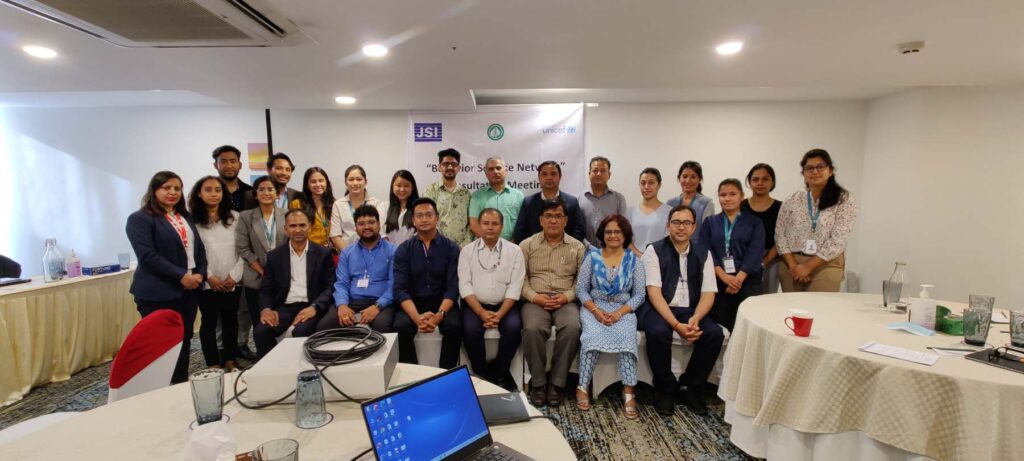
The project is in its early phase i.e phase 1.We have developed proposal and tools for the phase 1 in close supervision with the JSI and UNICEF. We have formed project management team, steering committee, national advisory committee as well as advisory group. We have conducted first provincial consultative meeting on 1st and 2nd July 2022 to discuss about rapid assessment. The meeting was organized by the DHKUH. Particpants for the consultative meeting were provincial health directorate from Bagmati, Madesh and Sudurpaschim province, members from NHRC and academia institutions, health coordinator of Dhulikhel Municipality, UNICEF team member, JSI team member and project member from DHKUH. The meeting was very much insightful as it played a foundation role in developing the proposal and tools for rapid assessment.
Similarly, we had one orientation and training program for the research assistants on the Rapid assessment at Dhulikhel Hospital. The training was provided jointly by DHKUH and UNICEF. We are now at Phase 1: Rapid assessment. We have submitted tour proposal on rapid assessment for ethical clearance at NHRC and are about to submit the proposal for the KUIRC.
Implementation Site
The study was conducted at two study sites in Nepal: Dhulikhel Hospital Kathmandu University Hospital (DHKUH) and Nobel Medical College and Hospital Private Limited.
Funded
Funded by the International Organization of Migration(IOM), Nepal.
Team Members
Project Principal Investigator: Dr. Biraj Man Karmacharya
Project Coordinator: Ms. Prajita Mali
Project Coordinator: Ms. Surakshya Kunwar, Ms. Anjali Joshi, Ms. Prasanna Rai
Research Assistant: Ms. Bidhya Chaudhary, Ms. Deepa Guragain, Mr. Manish Rajbanshi, Ms. Ishwori Shrestha, Ms. Namita Dahal, and Ms. Anusha Basnet.